You're not broken. You're depleted.
Somewhere around week six, the world decided you were done. The checkup happened — eleven minutes, maybe, most of it about the baby — and everyone quietly agreed you were "recovered." Back to normal. Bounce back.
Except you're reading this at some strange hour with your hair coming out in handfuls, a brain that won't hold a thought, exhaustion that sleep doesn't touch (when sleep even happens), and a low hum underneath everything that might be sadness or might be rage or might just be emptiness — and you're wondering what's wrong with you.
Nothing is wrong with you. Something was taken from you — gradually, biologically, generously — and nobody ever came back to help you replace it.
That's not a character flaw. It's not weakness, and it's not "just motherhood." It has a shape and a name: depletion. And depletion can be tended.
What actually got spent
Growing a human is the single most resource-intensive thing a body can do. Your baby was built — bones, brain, blood, every cell — out of your stores: your iron, your minerals, your fats, your protein, your reserves. Your body will always give the baby the best of what you have. That's the design. The mother is the source.
Then came the birth, and blood loss, and healing. Then feeding — by breast, by bottle, by both — plus the sheer metabolic cost of never sleeping more than a few hours in a row. Month after month, the account keeps drawing down. And here's the part almost no one says out loud: your body doesn't refill itself on toast crusts and cold coffee. Depletion doesn't resolve on its own with time. It resolves with replenishment — and replenishment is exactly the thing our culture stopped offering mothers.
Which is why you can be eight months out, or eighteen months out, or on your third baby, and feel worse than you did at week two. The debt compounds. If that's you: you're not behind. You're not failing. You're carrying an unpaid balance nobody told you existed.
The old way
For most of human history, in nearly every culture on earth, a newly delivered mother was not sent home with a pamphlet. She was fed. Kept warm. Kept in bed or near it, for weeks, not days. Older women closed around her like a hedge — cooking, holding, watching, teaching. Warm, rich, mineral-heavy foods appeared beside her without her asking. Her only jobs were to heal, to feed her baby, and to become who she was becoming.
Our great-grandmothers would look at what we do now — a woman alone in a house with a two-week-old, ordering groceries on her phone, expected to be grateful and glowing — and they would be horrified. The wisdom didn't stop being true. It just stopped being offered.
You can't summon a village out of thin air. But you can borrow the village's principles, and they come down to three things: warmth, nourishment, and being tended. Here's how to start with what you have.
Rebuilding, part one: food that actually refills you
Forget everything you've absorbed about eating "clean" or "light" or getting your body back. A depleted mother needs the opposite of light. She needs dense.
Eat warm and cooked
Soups, stews, porridges, braises, roasted things. Warm food asks less of a tired body and gives more back. If it can be made in one pot and eaten with one hand, it's postpartum food.
Eat fat without apology
Butter, olive oil, egg yolks, fatty fish, full-fat dairy if it loves you back. Your brain, your hormones, and your healing all run on fat. The foggy, flat, fragile feeling is often a body starved of it.
Eat protein like it's your job
Eggs, meat, fish, lentils, beans — some at every meal, including breakfast. Muscle, blood, and mood are all rebuilt from protein, and almost every depleted mother I meet is running on a fraction of what she needs.
Prize the deeply mineral-rich things
Slow-simmered bone or vegetable broths, dark leafy greens cooked soft, seaweed if you're adventurous, blackstrap molasses stirred into warm milk, stewed fruit, nuts and seeds. These are the old foods of the lying-in period across the world, and they were chosen for a reason: minerals are much of what the baby took.
Lower the bar to the floor
A carton of eggs, a pot of soup made once and eaten for three days, frozen greens thrown into everything. Depletion recovery is not a beautiful meal plan. It's the same six humble, dense foods on repeat. Boring is a feature.
Rebuilding, part two: the herbal infusions
This is the heart of my own practice, and I'll give you the honest, unglamorous truth: the most powerful herbs for a depleted mother are not exotic, expensive, or complicated. They're the weedy, generous, grandmother plants — and the way to take them is as nourishing infusions: strong, long-steeped herbal brews drunk like a food, not sipped like a tea bag.
The method: a large handful (about 30 grams / one ounce) of dried herb in a one-litre mason jar. Fill with just-boiled water, lid on, steep 4 hours or overnight on the counter. Strain, and drink over the course of a day or two — warm, cold, with honey, however it goes down. Keep it in the fridge once strained.
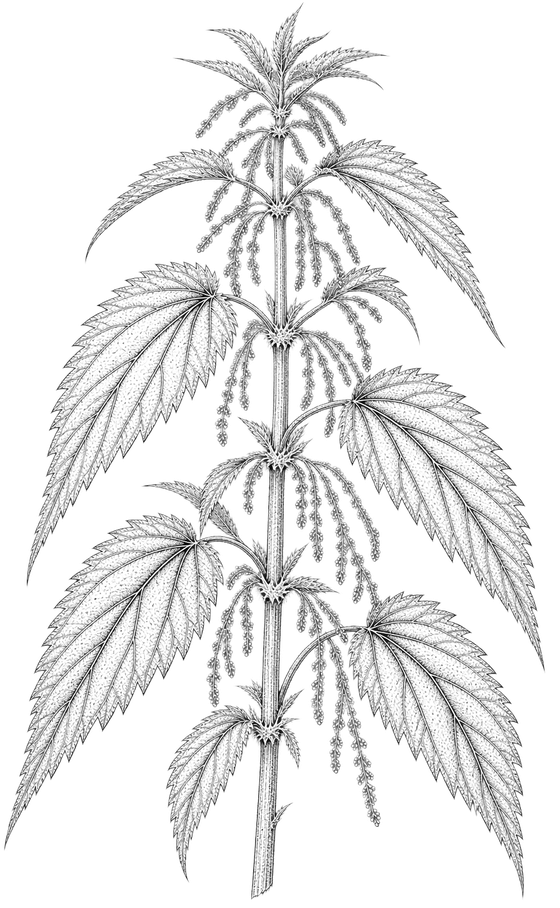
Stinging nettle (Urtica dioica)
The great replenisher. Deep green, rich in minerals, the traditional restorative for anyone who has bled, birthed, or burned out. It tastes like the essence of green. Most mothers feel this one.
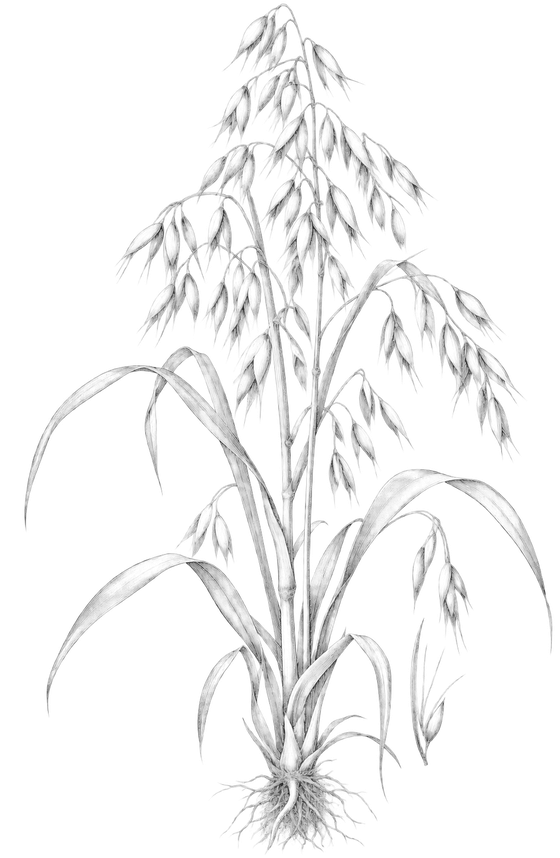
Oatstraw & milky oats (Avena sativa)
Food for a frayed nervous system. This is the herb of the mother who is wired-but-exhausted, tearful at nothing, jumping at sounds. Gentle, sweet-tasting, deeply steadying over weeks.
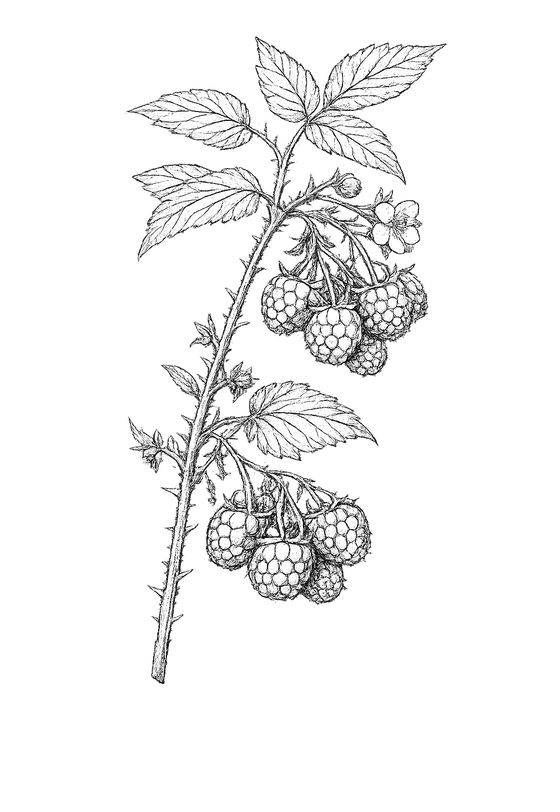
Raspberry leaf (Rubus idaeus)
The mother's oldest tonic. Toning, mineral-rich, and traditionally beloved for the whole childbearing year, not just pregnancy. It tastes like a plain black tea and blends kindly with the other two.
Rotate them, blend them, or marry one for a month. This is slow medicine — think weeks, not days — which is exactly the pace a depleted body can actually use.
A few honest cautions: these three are traditional nourishing herbs with long histories of use by mothers, but every body and situation is different. If you're pregnant, taking medications, or managing a health condition, run your herbs past your midwife, doctor, or a trained herbalist first. This guide is education and tradition, not medical advice, and it doesn't diagnose or treat anything.
Rebuilding, part three: rest you can actually get
I have a house full of children. I will not insult you with "sleep when the baby sleeps." Here is what's real:
Rest is horizontal, not just asleep
Twenty minutes flat on your back while the baby is on your chest and the big kids watch a show counts. It counts biologically. Take it without earning it.
One thing off the list, permanently
Not paused — removed. Somewhere in your week is a task that exists only because you'd feel guilty dropping it. Drop it. Depletion recovery is partly subtraction.
Let help be imperfect
The dishes done wrong, the toddler dressed strangely, the meal you wouldn't have made. Received help that's 70% right beats theoretical help that's perfect. Every time someone says "let me know if you need anything," answer with a noun: soup, an hour, the school run.
Warmth is a treatment
Socks, hot water bottles, warm drinks, warm food, actual baths when you can get them. Every traditional postpartum system on earth keeps the mother warm. Cheapest medicine there is.
The part that isn't physical
Here's the last thing, and it might be the one you needed most.
There's a word almost nobody will hand you: matrescence — the total remaking of a woman into a mother. It is as real, as hormonal, and as seismic as adolescence — and arguably more transformational. Your body changed, yes — but so did your brain, your priorities, your relationships, your sense of time, your very self. Nobody expects a thirteen-year-old to go through puberty gracefully in six weeks. You are in something just as large, and you're expected to do it silently, while running a household, looking fine.
So if part of your exhaustion is grief for the woman you were — or vertigo at not knowing who you're becoming — that is not a symptom to fix. That's the transformation itself, and it deserves witness, not a to-do list.
And one thing I need you to hear plainly: depletion and matrescence are normal. But if your mind is going somewhere dark or frightening — thoughts that scare you, hopelessness that won't lift, feeling like your family would be better off without you — that is beyond a guide and beyond herbs, and it is absolutely treatable. Please tell your midwife or doctor, or reach out to a crisis line, today.
And because I know this is the fear underneath: no one is going to take your baby away because you asked for help. Reaching out for support when you're struggling is the single most protective thing a mother can do, and it is treated that way. The women I worry about are the ones staying silent because they're afraid — not the ones who pick up the phone. Getting help is the strong move, and you deserve to be well, not just functioning.
You were never meant to do this alone
Everything in this guide works better tended than alone — that's not a sales line, it's the entire lesson of every culture that ever did this well. Mothers heal in the presence of someone whose whole job is them.
That's the work I do. I'm Stephanie — Community Herbalist, doula-trained, lactation educator, mother of eight, seven here with me (two sets of twins in there), and I spend my days walking women through exactly this territory: sixteen weeks of nourishment, herbs blended for you and shipped to your door, and someone in your corner who has been where you are, many times.
If that's what you need, everything about working with me — including the price, plainly — is on the main page. And if all you needed was this guide: take it, use it, send it to the friend who's drowning quietly. It's yours.
Warm the soup. Steep the nettles. You're not broken — you're mid-becoming, and you're allowed to be fed.
— Stephanie